Showing posts with label Top Posts. Show all posts

Tuesday, February 18, 2014

Building a Book: Second Draft

Edit: This is part of a whole series and I apparently forgot to provide that for people. Part 1, Part 2, Part 3, and Part 4 are all linked to now. Thanks for your patience.

So, with my NaNoWriMo project on its fourth month, I'm finally coming to the end of the first draft. Compared to what's coming next, that was the easy part.


It's my opinion at least, that your second draft on any work is the most dangerous. Not only are you looking for things to clean up, but you're looking for things that need to be added in. Character and setting descriptions, conversations, plot details that seemed to have slipped past. If a first draft is the bare bones of a story, the second draft is putting the skeleton together, making sure it holds itself up and that everything looks right. 

The best way to start is a simple read-through, from front to back. Not only is it a good morale boost to read the entire finished first draft, it allows you to pick out the easy errors: misspellings, homophones, glaring punctual and paragraphical errors. It also works as a reminder as it may have been a fair while since you last saw the first few pages.

From there, it should be much easier to see plot-holes, plot-lines which went nowhere, and things which seemingly jumped out of the blue. This shows you things to add, things to remove, and things to change.

Things to add.

Personally, I have an issue with character descriptions. I never seem to be able to slide them in during the first draft, which occasionally causes issues when I try to describe something later on. Even when it doesn't become an issue, it's nice to have a good idea of what the characters look like.

Upon re-reading a section, you might find it actually doesn't mention something you thought you had explained. In the second draft, this means going back and filling in important details that the reader needs to know which may have been left out because it was something you, (the author) knew well enough that you thought you had explained it when you really hadn't.

Adding things is probably the hardest part of a second draft. It's one of the main jobs of this revision to ensure the entire story is there, but you have to make sure you don't add something which contradicts something else later on in the story. This can be something as small as a change in a character's eye color that you then fail to switch over in every later instance, to an attempt at foreshadowing which gives away a plot twist chapters before it happens, or a bit of background on a character which drastically changes how he should react in a pivotal scene later on. Not that you should be afraid of adding things to a work after the first draft, but definitely be aware of what it can mean when you do.

Things to remove

While more of a focus for later revisions, some obvious flaws can be pulled out of the second draft. For instance, if you're aware of certain words that you have a tendency to abuse, you can keep an eye out and strike them from where they aren't needed. I have a habit towards redundancy, even to the point of using a single word two, three, or four times in a single sentence, particularly with the words "though", "before", and "often".

You should also keep an eye out for sentences which don't serve an obvious purpose. Even in a novel of 70, 80, or 120,000 words, each word should be able to carry some of its own weight. If it's not description, characterization, or action, ask yourself if a sentence really needs to be included. If not, strike it out.

Draft, the second

All that adds up to an ordeal which in some ways can be even harder than writing the first draft. I've seen it suggested that you should take a break between drafts, and it does somewhat ring true. Give your eyes and mind a break to recharge, so that you can come back later with the energy and a freshness which will allow you to read over your manuscript and spot things you may have missed otherwise. It also allows you to re-discover the story and see it better as a reader might.

It should go without saying that a book should go through several drafts and revisions before you send it out anywhere. Don't think that ten or twelve revisions means you can go without an impartial editor though. All those revisions just make it easier (and sometimes cheaper) for the editor to do their job of pointing out the things you didn't know were problems and you will always need eyes that aren't your own to look over your work. Sometimes you're just going to miss things no matter how many times you go over it.

So try not to stress too much. It's not like people are going to notice if your blonde, blue-eyed heroine suddenly turns into a black-haired, green-eyed heroin halfway through the novel anyway. Heh.

~ Shaun

Tuesday, October 8, 2013

2 Sentence Horror Stories

So, a while ago, the website Reddit had a little contest or something for its users to come up with two-sentence or less horror stories. The best of this contest hasn't quite gone viral, but it has popped up in several places that I've seen and while they won't keep you busy through the night reading them, there are some very nice little bits in there.


Of course, some have been around for a while now and turned into meme's. Ones which I think a lot of people have probably seen by now. These would be.

The last man on Earth sat alone in a room. There was a knock at the door.
Dude! Where did that spider go?!?

A few are actually really good though, and can very well be considered stories in their own right. There is one that had been almost universally declared the winner of this little contest, as it consistently gets listed as one of the best that was submitted.


Now, I want to go over this short piece, because there are a couple things here which are great examples of what makes a good horror story, of any length. 

1. An unexpected twist. You know this is a horror story. You read the first sentence and you're sure there actually is something under the bed. The monster grabs him and pulls him in, or something along those lines. What you're not expecting, is him to see his son under the bed, when his son just asked him to check for monsters while being tucked in. Which brings us to...

2. The "Oh shit." moment. You know the one. That point in any good horror story when you realize the hero or heroes are in it pretty deep. It could be where they've fallen into a trap or when the villain/monster reveals just how powerful it truly is. That moment in this short piece is right after you read the second line and the realization hits you that whoever just got tucked in is now sitting above the father who is down on the floor looking at (what we presume to be) his real son under the bed. Not only that, whoever (or whatever) is in the bed, asked him to look fully aware of what the father was going to see. There is no doubt in our minds at this point that whatever happens next probably isn't going to be pretty.

3. Not really a third, but just something else I want to point out as a reminder. Characters and Setting. A father, tucking his son into bed at the end of the day. Could there really be a more peaceful, sweet, little family moment? It feels like a very vulnerable moment, where something could easily slip in and strike, but at the same time, the idea that a monster or spirit or what have you would dare to step up at such a point is almost infuriating. 

Of course, there are several others. The original page on Reddit has over 1,000 comments. So, without further ado, here's more of the best. 
My grandmother told me that it was a gift to see the angel of death in front of people's houses, to know that he'd be collecting someone there soon. I thought it was a gift too, up until the day I began to see it in front of every house. ~ Ressurection_man
I woke up to hear knocking on glass. At first, I though it was the window until I heard it come from the mirror again. ~ therealhatman
My daughter won’t stop crying and screaming in the middle of the night. I visit her grave and ask her to stop, but it doesn’t help. ~ skuppy
Nurse’s Note: Born 7 pounds 10 ounces, 18 inches long, 32 fully formed teeth. Silent, always smiling. ~ ichokedcheryltunt
 You can find the whole thread here. 

Now, as some of you may have noticed, I fancy myself a bit of a horror writer as well, so I thought I would give this neat little challenge a try.

1. 2:47 PM. The moon set hours ago, but the sun hasn't risen yet.

2. I never swam in the lake. It was always too crowded with the people who lived in it.

3. I came home to find every door in my house shut and locked. I live alone and most of those doors don't have locks.

So there you have it. Now, I challenge my readers to go ahead and leave a comment (or two, or three) with whatever stories they themselves can come up with. Only two rules, it needs to be Horror, this is October after all, and they have to be two sentences or less. Ok? On your mark, get set, GO!

~ Shaun


Tuesday, September 17, 2013

Getting Published: Formatting for Kindle

October is just around the corner, and with it comes all manner of monsters, villains, disturbing acts and horrors. Also, Halloween is in there too. So, like I'm sure many of my fellow writers of horror blogs, I'm going to spend the entire month talking about horror. That being said, I'm going to spend this week and next going through a few topics I've had on the back-burner for a bit that lean more toward the business of writing.

Today's topic is that of formatting your work. This is something I've seen a lot of newer writers freak out about and one of the things that requires some serious research. So, I've wanted to put together everything I've learned for the benefit of those still searching and pulling their hair out.

Now, currently, my work is only available through Kindle, and Amazon via Createspace, so those are the formats I'm prepared to discuss. Eventually, I do plan on using Smashwords, which I've heard is generally really simple, and I'll go over that additionally when I get to it.

I do all my own formatting through Microsoft Word, but a lot of the steps should be pretty much the same. So, let's go.

Kindle

Let's start with Kindle, as a lot of newer, young, self-published authors are doing the e-book only route.

Now, you have your manuscript, editing and final proofreading is complete, formatting it properly is the only thing left before you upload and hit that big, green, publish button. To be honest, though, and to make things easiest, formatting should start before you even put down the first word. One of the biggest issues I've seen Kindle authors complain about, is having a massive indent at the beginning of paragraphs and dialogue. I had that issue myself before I learned the trick. It's actually very simple.

In the Paragraph section from the Home bar, click on Line spacing and then in that menu, click on Line spacing options. Where it says Indentation, under Special, choose First Line and then under By, choose how deep you want the indent to be. Mine is set at 0.5". Use this, and NOT hitting Tab at the beginning of a paragraph or dialogue, and you should have no indentation issues with Kindle. At least in the main manuscript.

If you do that from the start of writing your piece, that should alleviate a lot of headaches later on. Now, I want to introduce you to your new best friend. The show/hide button.


With this button turned on, you suddenly see your manuscript filled with thousands of odd symbols. Those are the formatting carriers that are normally hidden (hence, the show/hide button) which represent spaces, Enter strokes, and any other little details. To be blunt, you want as few of those symbols as humanly possible. Of course, you can't take out spaces or Enter pops from the end of a paragraph, so what I really mean is, don't use them extraneously. Don't hit the Enter key a bunch of times to create separations. Hit it once to clear the paragraph and then add a page break.

Page breaks are easy, you go to the Insert tab, and then under Pages, it should be right there. That ends the section you're on and automatically begins the next part on a new page.

Now, things may look a little odd depending on how you have the view of the work set-up. So I recommend going to the View tab and choosing Web Outline. That is effectively, how your book will look on the Kindle. Minus whatever you have when the show/hide button is on.

Now, you can make things more complicated if you wish, with a Table of Contents, which includes headers at the beginning of each chapter, but that really isn't quite a necessity in fiction works. Also, when you're talking about kindle, there's no need to worry about font size or type, as it generally lets the reader choose how they want to see the words.

A common suggestion is to turn off widow/orphan control. I must admit, I've never done this, and I've never had any problems with them. I actually think there is some confusion about what they are. So, from the Microsoft Word Help file...
"The last line of a paragraph by itself at the top of a page is known as a widow. The first line of a paragraph by itself at the bottom of a page is known as an orphan."
So, there's that if you wish to turn off the control of widows and orphans. I don't know that it really hurts or helps much one way or another.

Now, before I call that good for the day, I want to make a few notes for those who don't feel comfortable doing it themselves or need extra help. There are two main ways to do it otherwise. The first is simply to hire someone else to do it. There are several companies online that offer e-book formatting, one which I initially considered using before deciding to do it myself is the website 52novels.com. This would be the company used by one J.A. Konrath and they do layout and formatting for both print and e-books. I mainly shied away due to monetary concerns.

The other option people seem to like are formatting programs. Of those available, I've heard Scrivener listed as being among the best and most recommended. I must confess to not knowing much about it, but the program and instructions for how to use it are fairly easy to find, both across the internet and in book form. (It even has a version of "for dummies" available for it.)

So there you have it. Pretty quick, easy, and simple. You can check out my books to see how well it works and if you have any more tips or suggestions, feel free to leave them in the comments below. Thanks.

~ Shaun

Wednesday, September 11, 2013

The Antagonist

Any Horror story worth its salt will have a good and hopefully memorable antagonist. An opponent to the heroes that gets in their way at every turn, trying to kill and/or devour our hapless protagonists throughout the story. Sometimes you have a vicious monster, who happens to have caught their scent and thinks they smell absolutely delicious. Other times you have a villain who is chasing after them to take revenge for some past slight or just out of convenience or some other reason. Occasionally, the enemy is inside, a frayed thread in one of the character's heads that threatens to snap at any moment under the daily pressures they face. Regardless, if your main character gets up, goes out to get his mail, comes back inside and nothing happens and that's the whole story, very few people are going to want to read it. The antagonist is what gives the story its guts. The antagonist is what creates the problems that the story needs to set right before the end. So it doesn't really need to be said, but, the more memorable your antagonist is, the better.

The Monster 


The Monster is a machine. They are typically animals of some kind or another, merely searching for their next meal, or for something else they need biologically. The Alien creature from the movie Alien is the perfect example. It doesn't care about the pecking order of the crew of the ship, or about the humans and what their plans are. It is an animal, loosed upon a new environment and doing the only thing it knows how, and that is everything it can to survive. The creature from Alien is so memorable because at the time, nothing had ever been seen like it before. The design of the creature and the way it was shot throughout the movie, mostly in shadow, with brief glimpses of its full form played havoc on the imaginations of anyone who saw the movie. The fact that even when you saw it in full, you weren't seeing everything it could do, through acid blood and the second set of jaws, only added to the magnificence of its form.

The Villain


Is there a better example of the classic villain than The Joker? Utterly insane, he lives to create problems for the heroes. His schemes may stretch the gamut from simple extortion to threatening to destroy the city, or even the world in a fiery cataclysm, but he does it all for one main reason; to make Batman come out and stop him. In both comics and in cartoons, examples have been given that without Batman, Joker doesn't really even want to commit the crimes that he orchestrates. It's all a game to him, and without enough players, it's just not fun. He demonstrates the main difference between the villain and the monster; motivation. Monsters do what they do just because it's what they do. Villains have much more intelligent motivations, be it world domination, pointless destruction, or a few laughs.

Of course, there is always wiggle room, and in popular language, the two have somewhat become mixed. Villains that commit especially heinous acts may be called monsters, many times in a poor attempt to separate him further from the heroes and make his threat seem larger by comparison. There's a small tip, if you have to resort to wordplay to make your antagonist seem like a larger threat, he probably needs more work. Something to keep in mind is that your heroes (or survivors as the case may be), are only as great as the obstacles they overcome. The greater the antagonist, the more impossible it seems to defeat him and the more times the heroes try and fail, the more satisfying is the finale when he is finally overcome. After the story itself, the antagonist is probably the most important feature in a good Horror story, even more than the protagonist that has to get past them.

I've already gone over two of what I think are the most memorable antagonists, I'd like to bring up a few more before I close out, to give examples of what I think makes them truly memorable.


Sephiroth from Final Fantasy 7 is one of the best villains ever made. He actually grows throughout the story, as you discover more about him and his fall from grace. His motivations seem simple enough at first, your average revenge riff, but as the story progresses you discover his true goals are much deeper, more destructive, and more evil than that. In addition, his physical strength visually grows throughout the game and twists in the plot even give him power over the heroes in ways that you don't see coming and that are truly terrifying. For the game hailed as the rebirth of the franchise, Sephiroth carries much of the responsibility for that. 


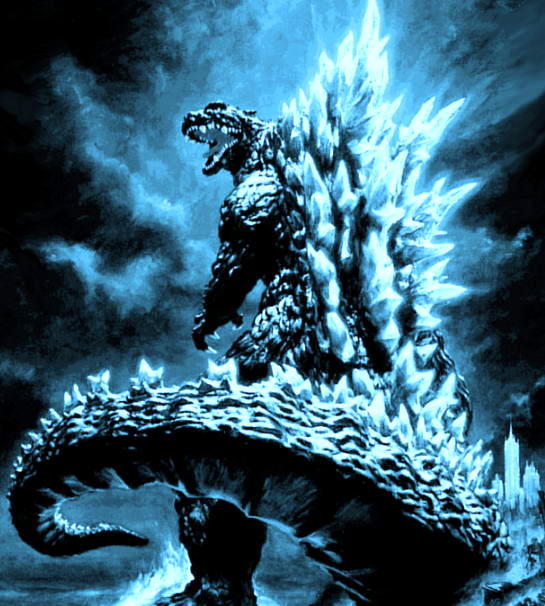
This is a personal favorite, as opposed to a widely recognized one. Godzilla is a great example of the Monster type of antagonist. More than that, he's actually closer to a force of nature. There is no stopping him, there isn't even any hope of slowing him down. The best you can hope for is getting out of the way. That said, there are always people who try. There are always those who try to match force with force and then fail, then there are the real heroes of the story, who use their intelligence to overcome what force failed to affect. I know in some stories, Godzilla became the hero himself, but I like him a lot better when he is an animal at best, lashing out at those he sees as invading his territory. (I can't tell you how much I'm looking forward to Legendary's new movie next year either.)


Freddy Kreuger is also one of the best villains in my opinion. He actually has two motivations, which combine into what he is. He was a child killer even before he was burned to death, something he did out of pleasure, and the retaliation of the parents and community only gave him the added bonus of revenge. His abilities to attack in and control people's dreams is what makes him truly frightening as a villain though. There is nowhere to hide and it doesn't matter how far you run. Nobody can help you. You only face him alone and on his terms. How do you fight something that always has the odds stacked in his favor and relishes the pain and fear you feel because of that? It makes those who survive his rampages (if there are any), all the more impressive in the end, and that, is the hallmark of a truly great and memorable villain.

Who did I leave out? Who are some of the best villains and monsters in your opinions? Feel free to leave comments with your thoughts.

~ Shaun

Tuesday, July 23, 2013

Doing your Homework

Lots of jobs have special training you need to take or college courses to master before you can claim to be proficient at work. This is true of Firefighters, Doctors, Lawyers, and even Politicians. Not so much for writers. Sure, you can go to community colleges and universities and walk out with English and Creative Writing degrees, but those are more for your own enrichment than anything that's going to help you be a professional writer. Publishing companies don't put you higher up on the list for being accredited.

Let's be honest here, too. You can only take so many classes about adverbs, clauses, and semi-colons before there's nothing more to learn, and most of those classes don't immerse you in the nuances of the language, the corner cases, and in some cases, how even to properly use all the different participles in your writing.


So, how do we learn to write properly? How do we learn all the nuances of the languages we write in? 

By seeing how other people do it. By reading. 
"If you don't have the time to read, you don't have the time, or the tools, to write." ~ Stephen King
That is how writers learn properly, that is how we figure out description, characterization, pace, plot and everything else there is for us to know, as well as how to put it all together.

In the past 7 months, I've read more books than I have in the entire ten years prior. This includes classic horror tales which I feel ashamed to have not read before while calling myself a horror fan and author. I've read independent books, traditionally published books, recent works and books of which you can find copies which border on fifty years old. Here I'm going to list some of the books I've read along with some of my thoughts on them.

Turner by Karl Drinkwater. I interviewed the author of this excellent book last month. This was one of the best reads I've had this year, and the lack of attention it seems to get just leaves me in awe. Self-published in 2011 through Amazon, it's a book easily comparable to ones which are traditionally published by the Big 5 publishers, and I greatly encourage anyone with an interest in Horror to give it a chance.


Hell House by Richard Matheson. This is one I expect to get some flack for not having read before. Lauded as THE haunted house story, it has become the basis for several movies. Traditionally published by Bantam Press in 1972, it was labeled even then as one of the great novels of the occult. I have to admit, I was holding off on reading this for the dumb reason of trying to avoid mainstream work. Several people have said though, that this is one of the scariest books they've ever read and between that and an idea I have for my own haunted house novel, along with the author's passing this year, I figured it was time I gave this piece a try. I am very glad I did.


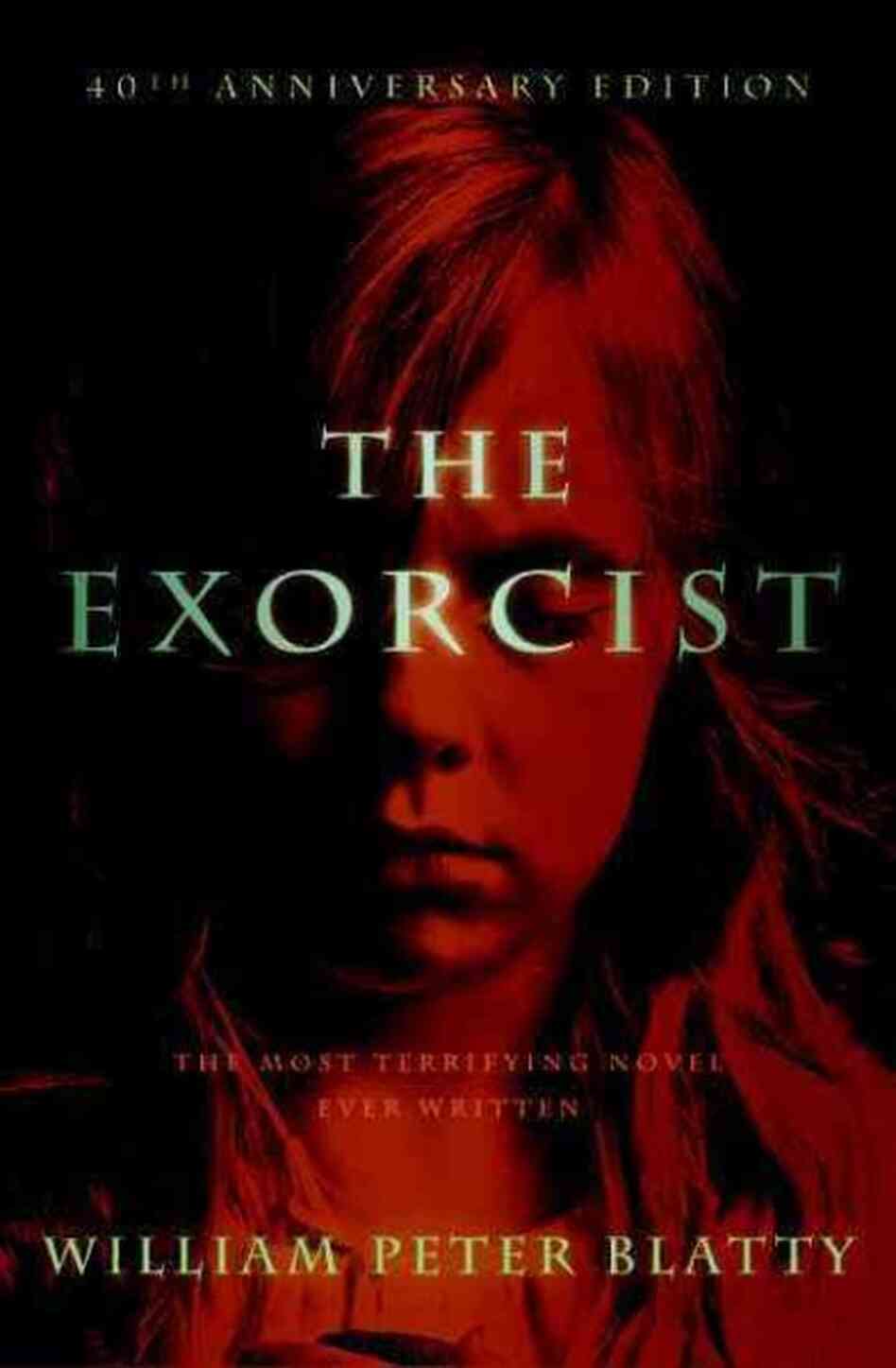
The Exorcist by William Peter Blatty.  Another one I expect flack for. We've all seen the movie which is now required viewing in just about any film study that looks at Horror. It has spawned sequels, prequels, copies, knock-offs, even toys. Published in 1971, the book is fairly dated, with a pace most younger readers won't be able to appreciate. Still, this book is considered a classic for a reason, and some would say it deserves a place at the top with Bram Stoker's Dracula and Mary Shelley's Frankenstein. I would have to agree with them, and a must-read for any fan of Horror.


Worm by Tim Curran. This is a short and quick, but fun read. I picked it out of a discussion on Goodreads and I'm glad I did. There is some mystery of where the worms come from, but it's lost in the action of the story with some scenes reminiscent of Stephen King's Dreamcatcher. Looking for something short and fun, this is a good book to pick up, but I wouldn't expect it to be on the New York Times Bestseller's list anytime soon. A good example of how people react differently to the same thing though, if you're looking for things to learn from.


Origin by J.A.Konrath. I will probably never stop singing the praises of J.A.Konrath and his blog, A Newbie's Guide to Publishing. I probably wouldn't be published today if it wasn't for all the information he pumps out so the rest of us can learn from his experience. Origin is one of his books that I like the most, an original premise, a horror techno-thriller incorporating religious themes and mixing it all together into one of the most unique smoothies of a book you can find. Some of his other works I haven't cared for, but this is one I definitely recommend. He even has whole blog posts where he talks about the path this story took to finally seeing publication.


So, there you have a good sample of what I've been digging into lately for my own homework. Trying to expand my mental experience, seeing what tricks other writers are using in their attempts to scare and traumatize their readers. Getting an idea of what is selling, what works, and what isn't.

I recommend all of the books above as ones to read for those who are fans of the horror genre in books. Some might have a bit of flavor you're not used to, but all make for fair and fun meals.

Finally, I leave you with this simple and easy homework assignment. Go read a book.

~ Shaun

Monday, June 24, 2013

Author Interview: Karl Drinkwater

So, my 40th blog post is going to be my first interview with a fellow author. 

Karl Drinkwater is a fellow author I met through Goodreads.com. I've read and reviewed his book Turner, giving it a full five stars and which I'll add on here as part of the introduction.


"A terrific read. Suspenseful. Fast-paced, but won't break your neck.  
A true page-turner. As a horror writer myself, I take pride in a certain level of familiarity with the types of stories that are out there. This book had me guessing (mostly wrong) the whole way through. The narrative flows with it's own voice while also giving you a sense of familiarity, certain passages reminding of the styles of Stephen King and H.P. Lovecraft. 
I want to make it a point that the author writes in true English and not American English. Certain parts are also written in Welsh, though they are all followed by translations. Both of these facts only add to the work, as the story reaches back through history. They add a sense of age to the work which makes it all the creepier.
If there was anything I didn't like about the story, it's that you had to be careful which characters you get attached to. This is one of those book where NOBODY is safe from getting the ax. Thankfully, though, the dog stays unharmed."
 I would definitely recommend it to anyone with an interest in a good horror novel.

So, without further ado, allow me to introduce and welcome Mr. Karl Drinkwater. Welcome, and thanks for the interview.

Thanks for asking me!

What got you into writing novels, and why Horror for your first book?

I started writing stories as a child at junior school, and was always fascinated with words and descriptions. I read loads of books and was a year or more above my age in reading ability. One of my favourite things was climbing the weeping willow at the bottom of the garden and reading books, either Enid Blyton or scary stories, the branch moving slightly beneath me.

For many years I wrote short stories but they got longer and longer until I realised I was ready to tackle a novel.

You’re right that my first book to reach the wider world is horror, but it isn’t the first novel I wrote. I spent a year writing a story of relationships in an office. Every break time and lunch time at work I would wheel my chair to the desk behind me where all my sheets of paper were stacked up and continue hand-writing the novel. Then at the end of the break would spin round and go back to library work. However, that book needed lots of work. I couldn’t see how to fix the imperfections at the time, and it ended up shoved into a drawer. I decided that I would try something with a faster pace, a tighter grip on the reader, something they wouldn’t want to put down. I remember pondering it while lay on my bed doodling one day, and decided I would write Turner to tick all those boxes. I called my girlfriend into the room. “Let’s go on a holiday to a mostly-deserted island, preferably without electricity.” She probably thought I was a bit mad, but then did the research and we chose Bardsey Island. Stayed there a week and I hand-wrote Turner, incorporating some elements of the island into the fiction. Then the weather turned bad and we couldn’t get away. I actually had to ring work and tell them I’d be missing a meeting because I was stuck on an island. Great fun to tell that to your boss and for it to be true. After reaching the mainland again it took a surprisingly long time to type the novel up, rewrite it, work with editors and a proof-reader and so on before it actually birthed itself in a peal of thunder, blood, and whirring chainsaws.

So horror was really my second novel, after my failure to write a literary masterpiece that twanged the heartstrings like a pink guitar being plucked by a drunken fat-fingered man in a red raincoat.


After Turner, you went back to Literary writing though, with your most recent book Cold Fusion 2000, correct? I have to admit to not having read that book, yet. Can you tell us a little bit about it ?


Well, it’s a book about how the past affects us, and the difficulties some people have in moving on. At its heart it is a love story but is also about life, coping, and maturity, seen through the lens of a physics- and poetry-obsessed super-geek (the physics and the poetry illustrate different and often-competing parts of his personality). I took a big chance with this book and used a structure that relies on the reader making connections - almost impersonating the main character - in order to understand a major part of the story. I wrote it in an ambiguous way that means anyone can enjoy the main story but things often have two meanings, and a reader who puts in the time and effort is rewarded with certain patterns that change the meaning. It’s difficult to say more without giving it away, but I’ve been lucky with my readers, and many of the reviews of the book have been really perceptive, have understood what I was trying to do. That feels absolutely fantastic. I love readers who ‘get it’.

It is actually a partner novel to the one I’m writing at the moment. Both stories about relationships set in Manchester in the year 2000, chosen as a turning point in lives, a time to re-evaluate what we want to achieve. The one I’m writing now has a lot of crossovers in place, theme, and even some minor characters. Hopefully when taken together they’ll add up to more than their parts.

Sounds intricate. Could this be the start of an entire series?

No, just two books, partners for life. I’m planning on making the covers match up when placed side by side. Apart from one or two short stories related to the characters I’ll move on completely when the novels are finished. Same with Turner – there will be a sequel, but that will then end the story. None of this trilogy stuff for me. I’ve always thought two of anything is enough, and the best things come in pairs. Apart from chocolate cakes, of which you can never have enough.

I can only take so much chocolate myself. I prefer a nice homemade Red Velvet cake. If I had my grandma's recipe I'd always have one made. But then again, I'm not much of a cook. I once screwed up macaroni and cheese so bad my dog wouldn't eat it. Anyway, between your two books on Amazon.com and on Goodreads.com you've got a total of 55 ratings/reviews, two of which are are two-stars while the rest are three or better. Is there anything you're not good at?

Ha ha! I’m not good at lots of things. I am not good at following my own advice, dished out so freely to others; I am not always good at resisting temptation; I’m not very good at dealing with the state of the world and human nature which can leave me rather depressed if I’m not careful. But in those cases I think you just have to do something positive (write some letters, give a donation, go out and do something) then not dwell on the issue too much. I’m not as good at handstands as I’d like, and I have the typical man/runner problem of not being good at doing forward bends. Which suggests I should go to yoga more, but I’m more likely to be distracted by a game of Plants versus Zombies, or drinking wine and eating chocolate on the beach.

As to reviews, obviously we make the books as good as we can, then revise and improve as necessary. Getting the audience right is key. I’ve discovered that giveaways are great for building awareness of your work, but it also means people who don’t even like your type of book enter it just to get something for free. Then give you a lower-scoring review, which is counter productive. Being able to target people who will enjoy your book whilst excluding others is important. Then everyone is happy. Like many things, it is easier said than done.


Would certainly be nice if we could keep our books out of the hands of people who aren't really interested in the genres we write in, but then, some people surprise themselves by liking something they hadn't thought they would. At the very least, they may like a particular author enough to appreciate the writing and the story while looking past the genre the work is in.

You're also from the UK. Aside from the obvious differences in language (humor vs. humour for example), have you noticed any differences in how other countries look at writing and books?


Good point about expanding a reader’s appreciation of other genres.

Mmm, that’s a tricky one, about differences. From the reviews it seems that some US readers warn others that the language is UK English and not to be put off by it. which struck me as strange the first time I saw it since in the UK we read US and UK books and never think twice about which it is, we just adapt to the text. I have quite a few readers in Nordic countries and I noticed they are very good at analysing parts of the text, or it could just be the particular readers I’ve attracted! Overall though I just see an international community of readers, and am touched by how easy it is to cross national barriers now and find people who appreciate your work.


Well, as Americans, we tend to not view things in a lens of international community. It's more just to tell people, "Some of these words aren't spelled like you're used to, but they are correct." Otherwise you might get reviews which talk about how many misspelled words you have.

Do you have an ultimate goal for your writing?


To be able to make a living off it would be nice! But really I just want to write things I’m proud of, and that can generate emotion in other people, whether it be fear or pity or sadness – I don’t care, as long as it touches people in some way. I pour my love and care into each book, get things out which need to be said, then let them free in the world. I’ve always written stories and I always will, and I look forward to seeing where this takes me.

Sounds good to me. Any final comments you'd like to make?

Only that I wish us both luck with our future writing endeavours! Plus: peace and love to all. The world needs it. Thanks for interviewing me. 

Thanks for your words. 

Where to find Karl and his work
Karl's Writing Blog

Many thanks to Karl for coming and allowing himself to be interviewed here. I greatly encourage anyone interested to take a look at his books. I can personally vouch for Turner and if that's any indication, Cold Fusion 2000 should be an excellent read as well.

~ Shaun

Sunday, June 16, 2013

Judging a book by its cover

Yeah, yeah. We all know the saying. You shouldn't judge a book by its cover. The thing is, it doesn't always apply, especially to books. Also, they may not have said it if they'd had access to photoshop waaay back when.

(This was probably pretty close to 'state of the art' back then.)

Today, we can make covers that show anything and everything, from dinosaurs and aliens, to spaceships and machines which conform to no known laws of physics, and in this age of self-publishing, you can certainly judge a book by its cover; using it as an example of how much effort the author has put into his or her work. 

One of the biggest complaints I've seen about authors who have their books published through a major publisher, is the lack of any control over the cover of their book. Sure, it sounds great, getting specific artists, marketing majors and designers all working on the first thing people will see when they pick your work up, but (since we're using old sayings today) too many cooks spoils the soup. This can end up with book covers that are the literary equivalent of a 'hot mess'. Where the idea of the book is lost in efforts to grab the reader's eye and draw them in with little regard for whether or not they would be willing to read the type of story which is inside. 

(Um. Okay. Yeah, this says Horror story.)

Self-published authors need to be careful, though. A lot of photographers actually copyright their photos so that you can't just snag any picture you want off the internet and slap your title and name across it. As well, a lot of people now are getting used to the signs of photoshopped images, even if they might not realize it. Ask anyone these days and I'm sure they can tell you they've seen pictures which just "didn't look right" even if they have no idea why. 

Artwork aside, there are a lot of considerations for a perspective self-published author. The proper Title is another issue, as well as font, size and placement of the Title.The third major detail is, of course, the author's name. 

Some established authors, such as Mr. King, seen above, are so well-known, that their name actually takes precedence on the book over the title. Some are so well known, along with what they write, that they can forgo both the title and the artwork and just put their name on the cover and call it done. 

(Pretty sure she could get by without titles at all, at this point. We all know what's behind this cover just based on who wrote it.)

Most of us self-published authors, aren't that well known yet. So while our name is important to have on the book, it's a distant third to the artwork and the cover. 

So, let's start with the artwork, as that will usually be the first thing to grab a potential customer's eye. 

Cover art thoughts.
1. It should be attention grabbing. This isn't as obvious as it seems. Sure action scenes and half-naked people will get attention, but also symbols and items can be used. It's not just images that make you stop and go "WOAH!". It's things which make you do a double-take and think "What is that?". There's a current trend towards simple and plain designs currently as well, a silver sword on a black background, a raven's black head against white, a crown among flames. Part of the reason for this trend is that with the advent of ebooks, advertising is based more on word-of-mouth than books which are trying to snag your eyes from the shelf at a bookstore, and it's becoming a way to cut costs. The power of a cover to attract attention still shouldn't be underestimated by any means, though.

2. The genre of the book should be obvious. People have expectations, and when those expectations aren't met, they tend to get cranky. It really goes without saying that a sci-fi/horror novel shouldn't focus on a beautiful woman and her handsome, shirtless beau riding a horse into the sunset on a beach, and if it does, the title and the blurb on the back or the description page better do a damn good job of telling the reader that they're not about to start an erotic romance story. Likewise, I wouldn't expect to see a dragon on the cover of a crime noir book, nor a headless corpse on the cover of a romance novel. Imagination being what it is, there can be exceptions, but if you're going to start a fight, why would you choose to start at the bottom and battle your way uphill? 

3. It shouldn't be too busy. You don't need to cram every character's face onto the cover, nor do you need a three-way split for the three main turning points in the story. Space is limited (unless you're doing an art book, which is a whole different can of corn) and you need to remember to leave room for the title and your name. It can be tempting to want everything on there and think "Well, this might grab some people, but not others. The other's might like this though, so we'll throw it in there too. And let's not forget this for the younger/older audience...". Throwing everything at the wall and seeing what sticks is not an effective way to do a book cover. 

The other main component of a cover is the Title. I'm going to try not wading out too deeply with this right now, save for how it applies to the cover. 

When you're coming up with your title, take into account that it's going on the cover of a book. Titles need to be read from a little distance, and in small thumbnail forms. This means longer titles become problems very quickly, as they either get smashed together as to become illegible, or they cover up the artwork you just spent so much time (and/or money) on. Generally speaking, the fewer words you can use, the better, as the bigger and easier to read you can make them without causing collateral damage to the artwork or the eye. 

There isn't really anyplace in particular you're required to place the Title and the author's name. The top, the bottom, down the side. Wherever it goes though, it should be legible, the art shouldn't be obscured too much, and the reader shouldn't have to hunt and peck for any of it. 

As usual, these are my opinions, based on my own observations and any writer should feel free to disregard any part or the post as a whole. Feel free to leave a comment at the bottom calling me a loon. At the very least though, it is food for thought. Cheers.

~ Shaun


Monday, May 13, 2013

How not to be Professional

This is a topic I've touched on before, but apparently, not enough people got the memo.

If you want to be a popular, respectable author that makes a living off your work. PUT IN THE EFFORT!

I don't care if you're worried about your piece losing its voice. I don't care if your mother jumps up and down because she's happy you've managed to string five words together. I don't even care if you've been in a car accident and have brain damage. We have computers with spell and grammar checks. There are people out there who make a living as editors and proofreaders. There is NO excuse not to use either of them.

Self-publishing is still in its infancy, but it is growing up quickly. Even established, traditional authors are starting to move over to it. Still, it carries a stigma that the majority of self-published works are sub-par and poorly written. And it's all thanks to people like this.

"I don't use any programs other than spell check lets face it I still type with two fingers. I don't let anyone edit my stories because I believe it is important to not let some program create a style or input any content. when you read my stories you can be certain they came from my heart not some program or editor .so the mistakes are mine and I may not write in a predesigned format but you will be able to appreciate the story you read is my story."

I pulled that right off a guy's bio on Amazon.


In case you didn't notice, I would like to point out the above block of text has not been touched up. There are no comma's, no capitalization, and the very idea the paragraph conveys is ludicrous. I have glanced through some of his book and it is written in exactly the same way.

Here's a sample from another published book on Amazon.

"I Once dated this girl named Donna. That I met off an 800 chat line! We chatted on and off for a few days. She seemed to be idea woman for me. So I gave her a chance. We decided to meet up at a local mall. I was nervous about meeting her. I hadn’t been with nobody in over a year. On the phone she seemed to be intelligent and down to earth. But little did I know this would turn out to be the worst date or dates. ( Yes there were more than one.) And I can explain as follows."

COME ON!! It's no wonder people think self-published books are trash. 

If we want to be taken seriously as authors when we self-publish, we need to put our best foot out there. That means editing, proof-reading, and cover art to the best we can afford. As I have said before, we don't get any slack for being self-published, nor do we deserve it. It is up to us to prove we can put out work every bit as good or better than the big traditional publishing companies. 

Seriously, we can do better than this.

Really. I'm not trying to crush anyone's dreams here. I'm saying we can do better. We should do better. We NEED to do better. It is not that hard to find people to give us a hand on the internet. Beta readers are generally easy to find and most are more than happy to point out a few places where a book needs work. Cover art isn't hard to find either, particularly with the number of photoshop programs out there. If you want to be a respectable, successful author, you put in the work to make your story the best it can be. If you want to be a joke and an example of how NOT to write a book, you do what the examples above have done. 

This is the perfect example of the statement "Just because you CAN do something, doesn't necessarily mean you SHOULD." Self-publishing through Amazon and other services opens the door to just about everybody. It's a good thing. It means a lot of good authors that have been ignored by traditional publishing companies, now have other options, and a lot of good books are getting printed. Most will be ignored though because of people that think just slapping their work together with glue and letters cut-out from magazines is acceptable. 

Unfortunately, there are also people like this, who effectively condone these half-assed works.

"I am a reviewer for Goodreads, Library Thing, and Netgalley. Also other people that offer me books. Usually the books that I get are not proof read and there has been only one book with a lot of errors in it, but I read it anyway because it was a wonderful romantic comedy. When I review I take it into consideration that the book I get hasn't been proof read. I never mention that in my review. I just do a straight review on content and ease of reading. The proof reading is a job for someone else."

Now, it's one thing if the work is going to be proofread before release. If not, if you're looking at a final copy which is riddled with errors and you shrug your shoulders and say "It's not my job."...well, you're right, but it is something which should be accounted for in the review. No book should get a 5-star review from a semi-professional reviewer based on "heart" and "what the author was trying to convey" when the book is effectively one big run-on sentence with every fifth word misspelled. 

Honestly, despite all the hope I have for the self-publishing movement and despite the fact that these lazy people aren't actually slowing the movement down, I am saddened by these people. I honestly doubt any of them are actually aware of just how much damage they are doing to their own reputations, to the self-publishing movement, and to the written word in general. It is only made worse by the fact that some of them are downright combative when others attempt to point out mistakes and flaws in their work.

I feel I should apologize, I meant to get the initial examples off my chest and then dive into the importance of editing. In the writing of this post though, I realized just how deep the problem actually is, from the writers who don't care enough to have an extra set of eyes go over their work, to the horrible covers, to reviewers that rate books without regard for the work's spelling or grammar.

Self-publishing may be the wave of the future, but there's a lot of garbage washing up on the beaches for it, and for those of us who endeavor to make it recognized and respectable, we have a lot of work to do waking people up to the proper way to do things.

~ Shaun 

Tuesday, April 23, 2013

Thoughts on bad reviews

Before I dive in, here's the link for my first interview as a writer. Check it out. Good stuff on there.

http://awesomegang.com/shaun-horton/

Now then...

You can't please everybody. That's one of the old sayings. Unfortunately, this week I picked up some proof as I got my first two 1-star reviews on my debut novel The Unknown Neighbor. Not gonna lie, that stings.

Not as much as this, though.

Now how to deal with such a thing? One popular author cites the quote above and says "Don't worry about it. I never read reviews of my work." After all, if your book actually IS good, then the good reviews will pretty much always outnumber the bad ones. Some particularly sensitive people might report it to Amazon and request the review be taken down. I've also heard horror stories of some mean-spirited authors collecting their friends and practically waging war against the reviewer, down-playing every review they've made and bombarding them with spam emails and other tactics. 

If you can't deal with people not liking your work. Quit while you're ahead. Free speech is one of those rights people seem to be particularly attached to, and if you put your work out there for public consumption, they're going to speak their mind on it. 

"But bad reviews hurt our profits!!" I hear the resulting cry. "If you can't say something nice, you shouldn't say anything at all!!" 

Suck it up. Nobody is going to make a real profit on one book, and if you have more than one book out, most likely you're not that concerned about a few bad reviews. (Now, if your book is 75% bad reviews, maybe you should just accept you've written a bad book or badly written a decent book.) I believe most of the people whining and crying about bad reviews are trying to claim to make a living off of one book. News flash, unless you wrote an automatic best-seller or hit a movie deal, (in which cases, you're unlikely to be fazed by a few bad reviews.) you're not going to be bringing in $3000 a month on one book. 

Again, I'm not going to lie, after the two bad reviews, my book has dropped in sales. Significantly. Like from 20 to 0 in the space of a week. It hurts, no bones about it. But I'm not going to whine that they shouldn't be allowed to talk about my work like that. I'm not going to start a smear campaign against the reviewers, and I'm not going to report them to Amazon calling them liars and tools. (Even though one review is a little suspicious.) 

What did I do about it? I looked up my favorite book of all time, Jurassic Park, and pulled up some of its one-star reviews. Now few people will argue it's a good book, even with its issues. But looking over its bad reviews served as a good reminder that not everyone has the same tastes in reading and what some will like about a book, others will hate. There will also be a percentage that just doesn't "get" the book as it's written. Nothing you do is going to appease those readers, and even if you wrote a book specifically for them, there would be other people who don't like your book. 

I've had this discussion on a few forums and you can't change people's minds about whether or not bad reviews should be allowed. Some people are just wusses who can't stand the idea that other people's opinion of their work could actually hold weight. Most of my views I've expressed here, I had before my book was even published and now that I am and I've gotten some bad reviews and seen first-hand the damage they can do to sales, none of its changed. 

So to sum up.

If you've written a best-seller, multiple books, gotten a movie deal, have three-times more good reviews, or you're just plain confident in your work; then you don't worry about bad reviews. 

If you're squeezing the life out of the idea that one book's worth of work (or less) can make you rich and famous; you're probably one of the ones that screams "Foul!" at every bad review. 

Of course, that's just my opinion, I could be wrong.

~ Shaun

Tuesday, April 9, 2013

Originality

Few things get as much fuss in writing and creative endeavors as originality. Everyone wants to do something different, something new, something nobody else has ever done before. Everyone wants to be the pioneer that leads the way for the rest of the pack, something for which their legacy will be forever entombed in cement somewhere along with a statue to serve as a toilet for passing birds.

Now, before I get hip-deep in this little discussion; I'm not in any way, shape, or form, trying to say there is nothing new to find or try. I believe the capacity for the human imagination truly is infinite and that we will never reach the boundaries of what we can come up with.

The truly original storyline or piece of art is fast becoming a holy grail. Let's be honest, there is sooo much out there now that to honestly believe you've written something that is nothing like anything that's been done before is either arrogance or ignorance. Just because you've never seen or read it before doesn't mean it's not out there. Hundreds, if not thousands of new books are published each year, on top of what's been put out since the printing press was first invented. Can anyone really claim to have been through all of them to give authenticity to the idea that their new story is completely original? I don't think so. 

I think we reach too far for that golden ring which is true originality and miss a lot of chances that are right in front of us. How many manuscripts have gone unfinished or never published simply because they're "similar" to another work? Probably more than anyone would like to admit. 

I put this to you though, how "similar" does a work have to be before it loses its own voice? Every person on the planet is different (unless you believe in doppelgangers) and no two people are going to write something the same way. Different things affect us differently and while one writer might focus on the fear a particular scene engenders, another writer might focus on the courage of the individual experiencing it. Word choices, grammar usage, all change from writer to writer despite the conveyor belts that are the english classes we're put on through for all our school years. 

Just because two stories might boil down to the same idea, (for instance a small band of survivors trying not to die during a zombie apocalypse) the execution makes all the difference and creates two extremely different pieces. Now, just because these two works start with the same idea, does that mean neither one is original? I get the feeling that most people would look at this example and say "Yes, neither book is original if they share the same idea.". But, if you were to hand them two different books and ask them if they think those are original, they would also say "Yes, they're original because they're different books." 

They may have the same ideas, similar characters, and parallel endings, but it's really the meat of the story, not the specifics which really denotes whether a book is original or not. After all, for all their similarities, nobody will ever argue that an apple is an apple, an orange is an orange, and neither one is the other. 

So whether you're writing a book or putting paint to canvas, my suggestion would be to do what feels right to you and don't worry about how original it is. After all, anything you create honestly, with your own voice, will be something that nobody else will have ever created before or after, despite the similarities people might pick out. 

 ~ Shaun

Rimmer: "I'm a competitive man, Kryten. Always have been."
Kryten: "We're all very well aware of what you are, Sir."